


Welcome to Views From Above, a newsletter bringing you satellite imagery snapshots of world events. Today, we are looking at Russia’s expansion of drone launch sites used to attack Ukraine.
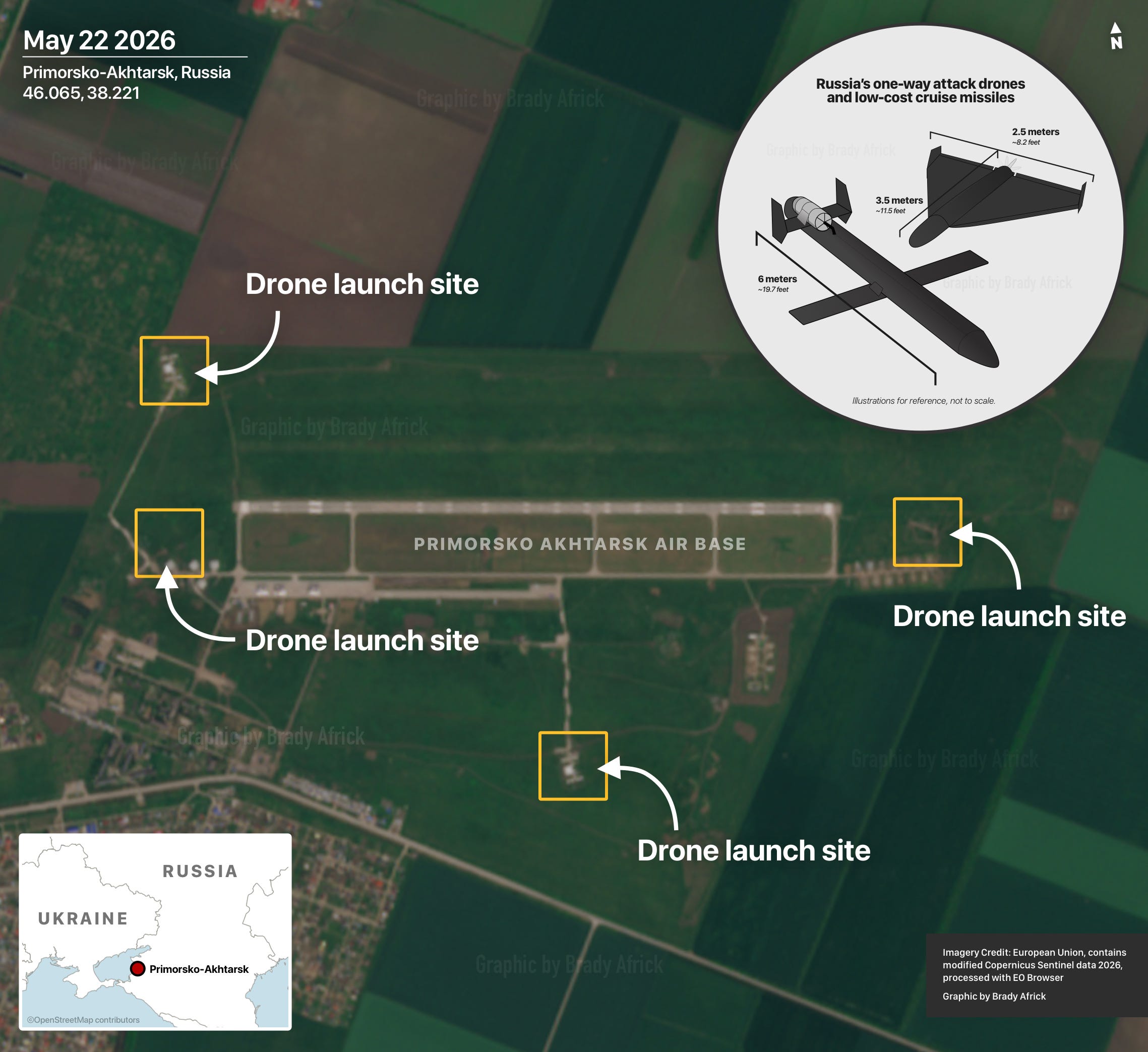
Russia is expanding launch sites for one-way attack drones at an air base near southern Ukraine, satellite images show. The newest launch rails at the base are longer than others nearby, a sign they are built to accommodate heavier jet-powered drones. These newer drones fly faster than Russia’s propeller-driven models, which makes them harder to shoot down. Similar construction is underway at other Russian drone launch sites, as previously reported by Business Insider. Each of these locations feeds into a drone campaign that has escalated sharply. Russia launched about 16,000 drones at Ukraine between January and March 2026, roughly 6,000 more than in the first quarter of 2025.
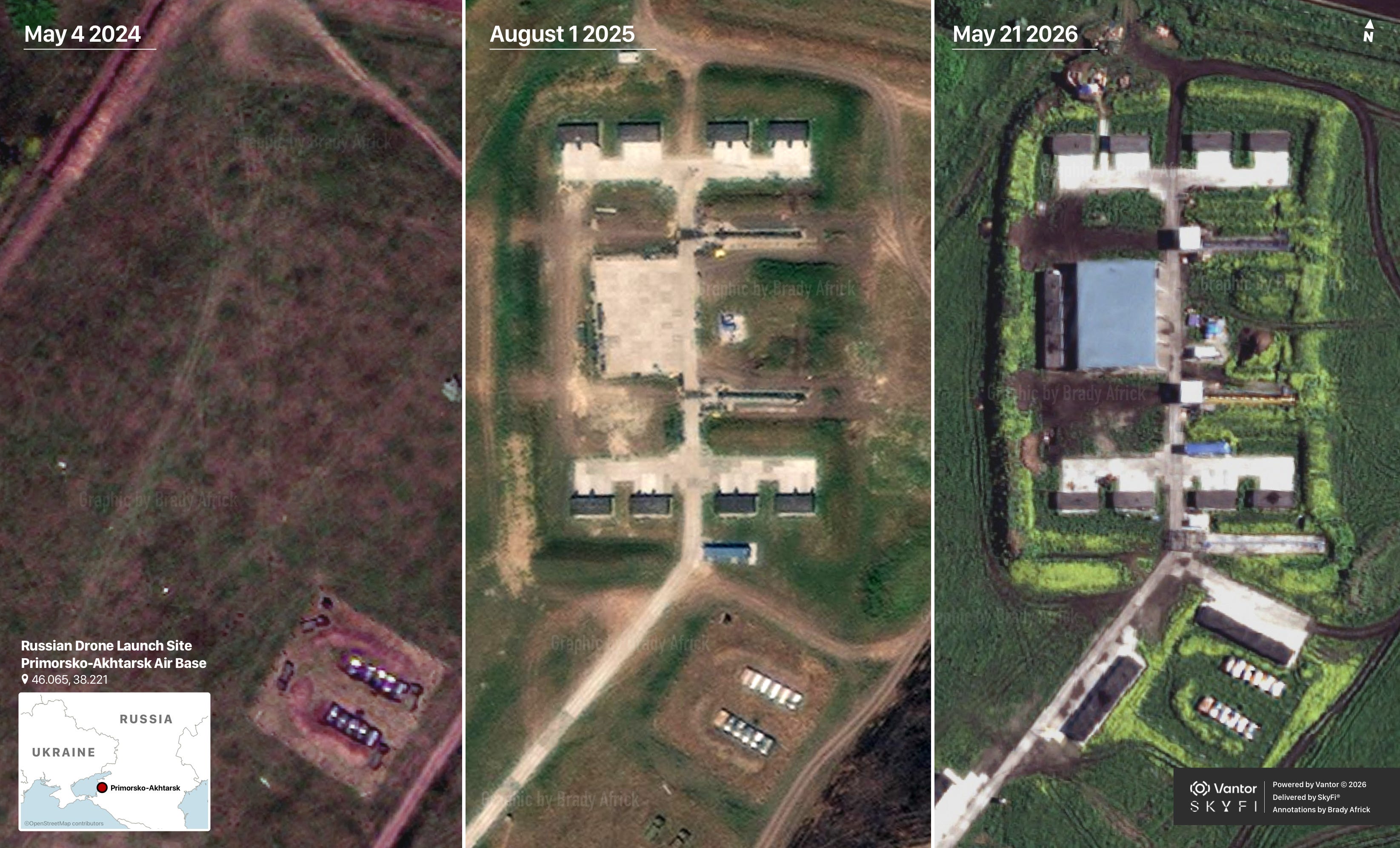
The buildout reflects the rapid pace of developments in drone warfare between Russia and Ukraine, in which both sides have fielded an evolving mix of drones and missiles with different ranges, speeds, and costs. The most infamous of these remains the Shahed family of drones, originally designed in Iran and now produced and modified by Russia under the name Geran.
Ukrainian military intelligence assesses that Russia now manufactures roughly 400 Shahed-type drones per day, with a stated goal of reaching 1,000. Fixed launch infrastructure, like what is visible at this air base, is what converts that production into waves of attack drones launched at Ukraine.
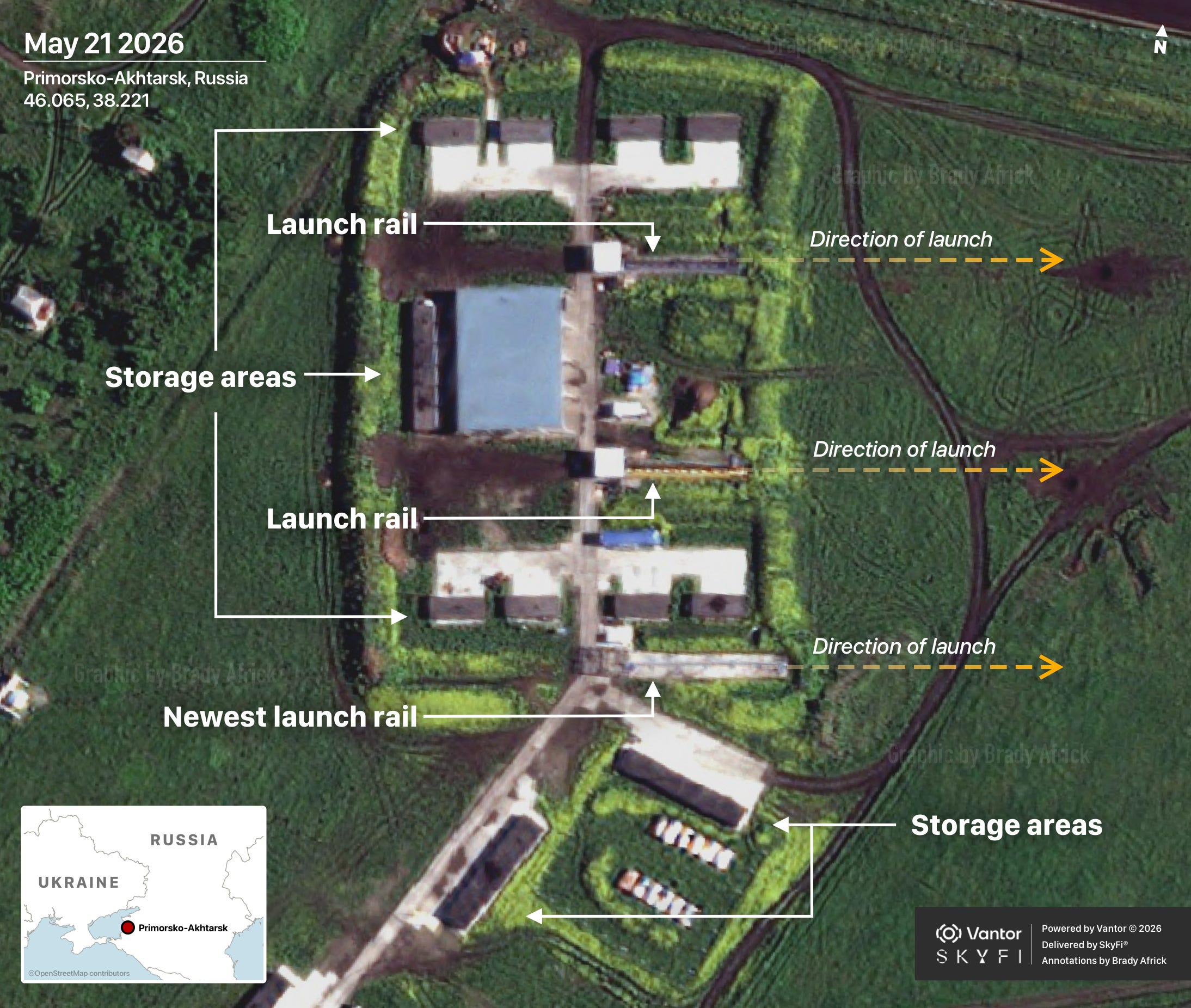
Russia has built at least eight of these facilities, each with multiple launch rails. Most of their locations form a rough arc pattern that follows the border with Ukraine, with others located inside occupied territory, and at least two show signs of expansion to accommodate Russia’s new jet-powered drones. Ukraine is aware of these launch locations and has targeted them with strikes in the past, but fully disrupting their operation has proven difficult. More recently, satellite imagery captured smoke rising from a storage area at the site shown above, though the cause is unconfirmed. Drones are typically held in protected areas until close to launch, leaving Ukraine with only narrow windows to destroy them on the ground.
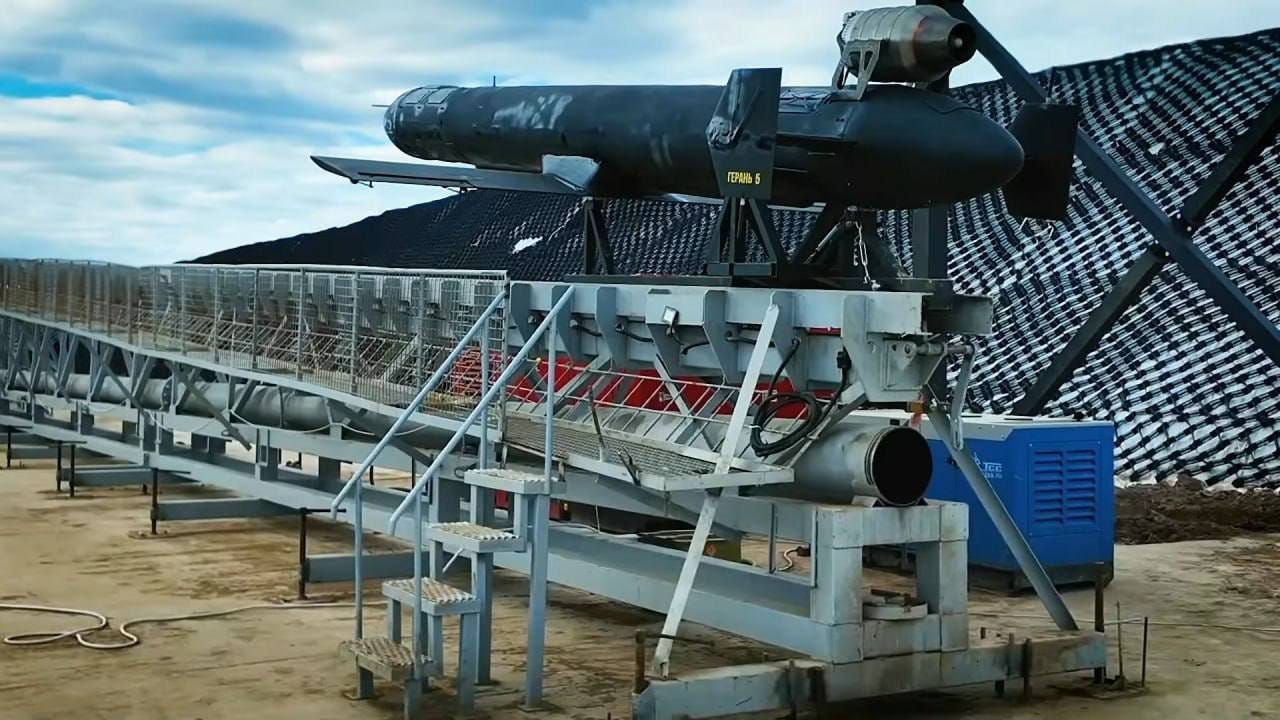
The impact of this growing infrastructure extends beyond Ukraine. Militaries across the globe are keeping a close eye on the conflict and using the lessons learned to develop strike drones, interceptors, and infrastructure with the right balance of cost and effectiveness. As recent conflicts like the war between Iran and the US and its partners show, Kyiv’s low-cost solutions to confronting waves of drones may prove useful well beyond Europe.
Thanks for reading Views From Above. Subscribe for free to get satellite imagery and news delivered to your inbox. Already subscribed? Share this newsletter with a friend.