


Welcome to Views From Above, a newsletter bringing you satellite imagery snapshots of world events. Today, we are looking at strikes on data centers in conflicts across the globe.
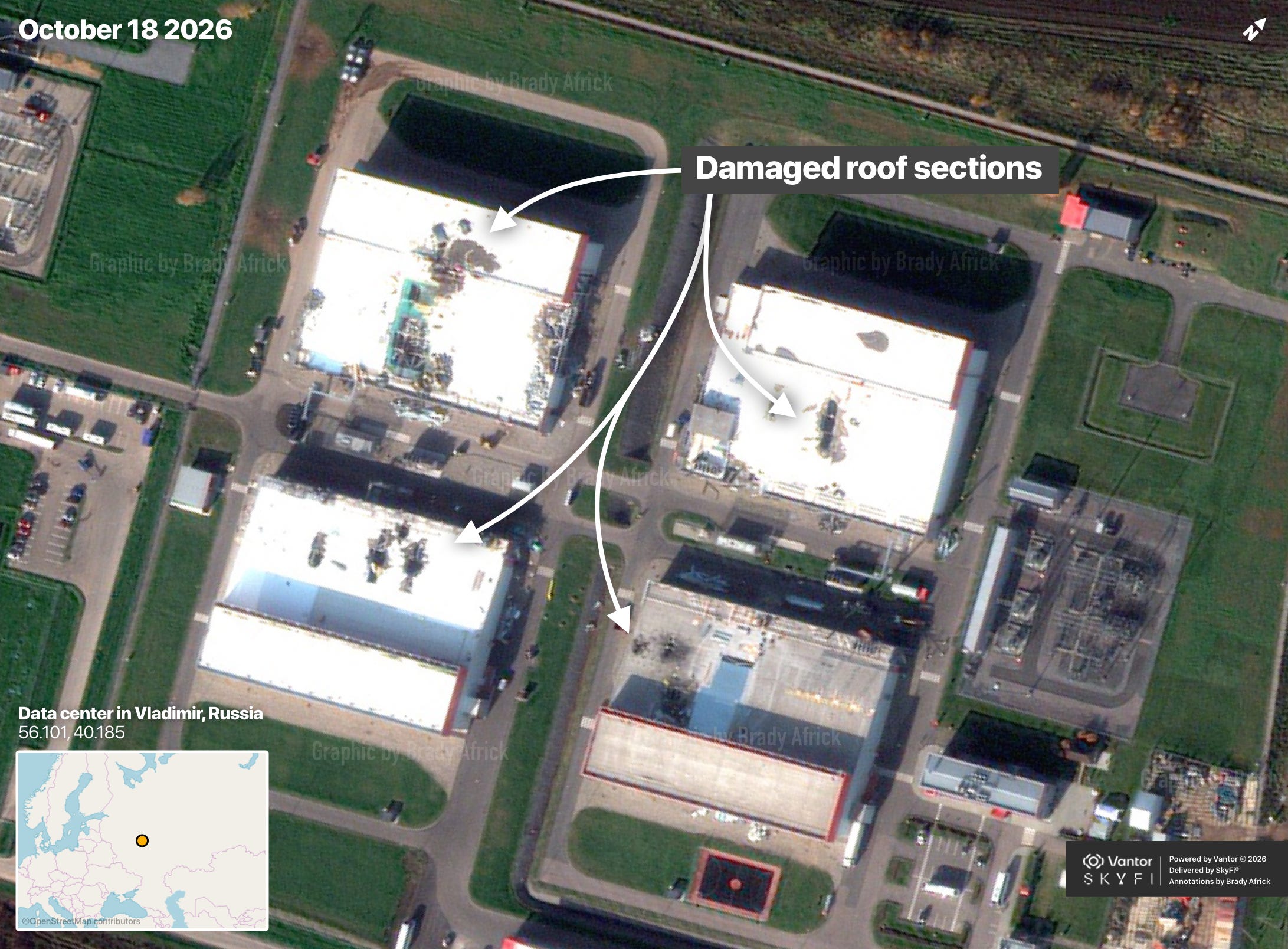
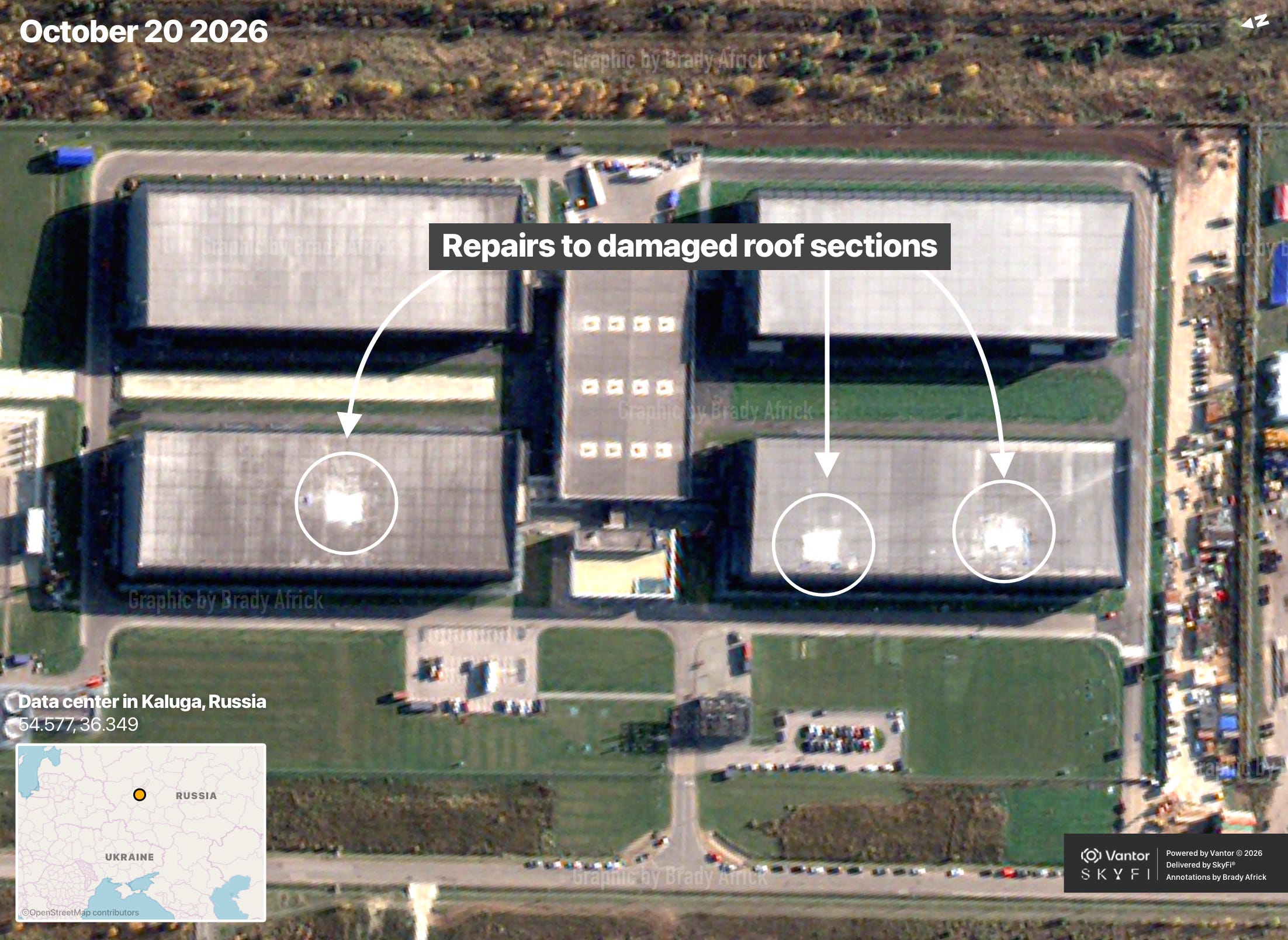
Over the past few weeks, explosions rocked multiple Russian data centers. Those used by the Russian technology company Yandex and social media giant VKontakte were hit, and some were forced to shut down. Another facility belonging to Russia’s largest bank was also targeted, with customers reporting disruption to its services afterward. Other sites in Russian-occupied Ukraine were hit, too. This concerted effort from Kyiv to strike Russian data centers has taken shape over the last few weeks, and shows few signs of slowing down.
These strikes are part of a larger campaign by Ukraine against the industries supporting Russia’s war effort and economy, which has also targeted energy facilities, military equipment manufacturers, and commercial warehouses that facilitate the sale of dual-use goods. Ukraine is familiar with the effects of these kinds of strikes, as Russian forces have hit the same kinds of facilities in Ukrainian cities, in addition to civilian areas with no military role.
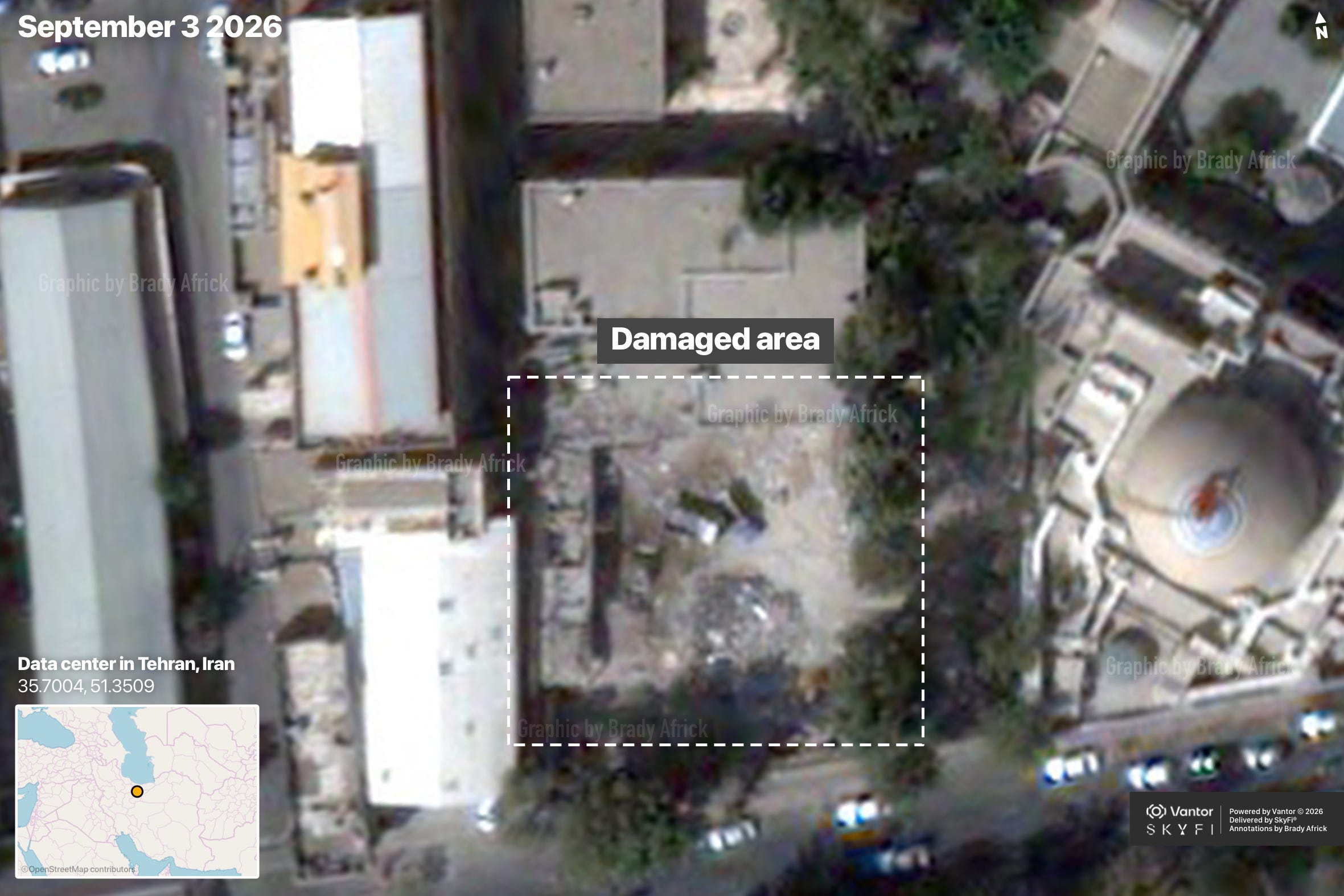
The practice of targeting data centers is not limited to the war between Russia and Ukraine. The US and Israel have reportedly struck data centers in Iran, including one linked to an Iranian state-owned bank. In the United Arab Emirates (UAE) and Bahrain, data centers operated by Amazon were hit by Iran. The resulting damage has left the company unable to restore some customer data stored in the region.
Amazon opened its Bahrain-based cloud services in 2019 and those based in the UAE in 2022. But now, Iran’s strikes have prompted some in the region to revise their plans for new facilities, with a particular focus on how they can be protected from threats.
The targeting of data centers in warfare reflects their growing role in countries’ economies and the military function they can serve in times of conflict. The US and China are racing to build massive facilities capable of meeting the intense demand brought on by advancements in AI, and other countries across the globe are incentivizing similar developments. But these facilities can be vulnerable in today’s era of cheap aerial threats. As expert Chris Miller warns in the Financial Times, “a drone that costs thousands of dollars can produce millions of dollars of disruption.”
Hardening data centers in ways similar to some energy facilities, constructing them underground, or distributing them across more locations are all strategies being considered to protect new sites. US defense planners should prepare for the disruptions that data center strikes could cause for the American military and economy, even in places far from front lines. As the latest strikes on these sites show, distance and diplomacy cannot guarantee a data center’s security.
Read more from Views From Above


Thanks for reading. Subscribe for free to get satellite imagery and news delivered to your inbox. Already subscribed? Share this newsletter with a friend.